Decoding Winner Lists: Patterns and Insights from Sweepstakes Successes
Decoding Winner Lists: Patterns and Insights from Sweepstakes Successes

Winner lists from sweepstakes promotions offer a window into the mechanics of these contests, revealing how participants secure prizes through entries, timing, and sheer volume; experts who analyze these lists often uncover repeatable patterns that shed light on success rates across various promotions.
These lists, typically published on sponsor websites or regulatory filings, include details like winner names, states or provinces, entry dates, and prize values, providing raw data that researchers parse for trends; what's interesting is how such disclosures, mandated in many jurisdictions, turn opaque contests into analyzable datasets.
The Structure of Typical Winner Lists
Sweepstakes operators compile winner lists shortly after draws, listing grand prize recipients alongside smaller awards; for instance, a standard entry might show "John Doe, Texas - $10,000 Grand Prize" followed by dozens of regional winners, all verified through no-purchase-necessary rules that keep promotions legal.
But here's the thing: not all lists look the same, since formats vary by sponsor size and jurisdiction; larger national contests from brands like Coca-Cola or McDonald's feature hundreds of names spanning states, whereas niche promotions cluster around specific demographics, and observers note how this structure alone hints at entry pools.
Data from industry reports indicates that comprehensive lists average 50 to 500 winners per promotion, with prizes ranging from gift cards to vehicles; those who've studied archived lists discover that publication timelines—often within 30 days of the draw—align with state laws requiring public access, making historical comparisons straightforward.
Geographic Patterns That Stand Out
One pattern jumps out immediately in many winner lists: geographic concentration, where states like California, Florida, and Texas dominate due to higher population densities and entry volumes; figures from a U.S. Federal Trade Commission analysis of major promotions reveal that these hotspots claim 40-60% of prizes, even in nationwide draws.
And yet, smaller states punch above their weight sometimes, as savvy entrants from places like Wyoming leverage online entries to compete; researchers tracking lists from 2020-2025 found that rural areas saw upticks during pandemic lockdowns, when digital submissions surged by 35%, according to platform analytics.
What's significant is cross-border insights too; in Canada, lists from promotions like Tim Hortons Roll Up the Rim show Ontario and Quebec leading with 70% of wins, mirroring U.S. trends but scaled to provincial populations, and this consistency helps forecasters predict hot zones.
Turns out, timing ties into location as well; entries peaking around holidays or paydays correlate with winner announcements, creating seasonal clusters that repeat year after year.
Repeat Winners and Entry Volume Insights
Scrutinizing lists over multiple promotions uncovers repeat names, a phenomenon experts attribute to high-volume entrants who submit thousands of free mail-in or online entries; one study by gaming analysts examined 100 lists and identified 12% of winners appearing in at least three contests annually, often from the same households.
But here's where it gets interesting: these repeats rarely snag grand prizes consecutively due to affiliate rules prohibiting it, yet they rack up mid-tier awards consistently; data indicates that dedicated participants, submitting via multiple emails or family addresses, boost their odds by factors of 10 to 50, as evidenced in archived lists from publishers like Publishers Clearing House.
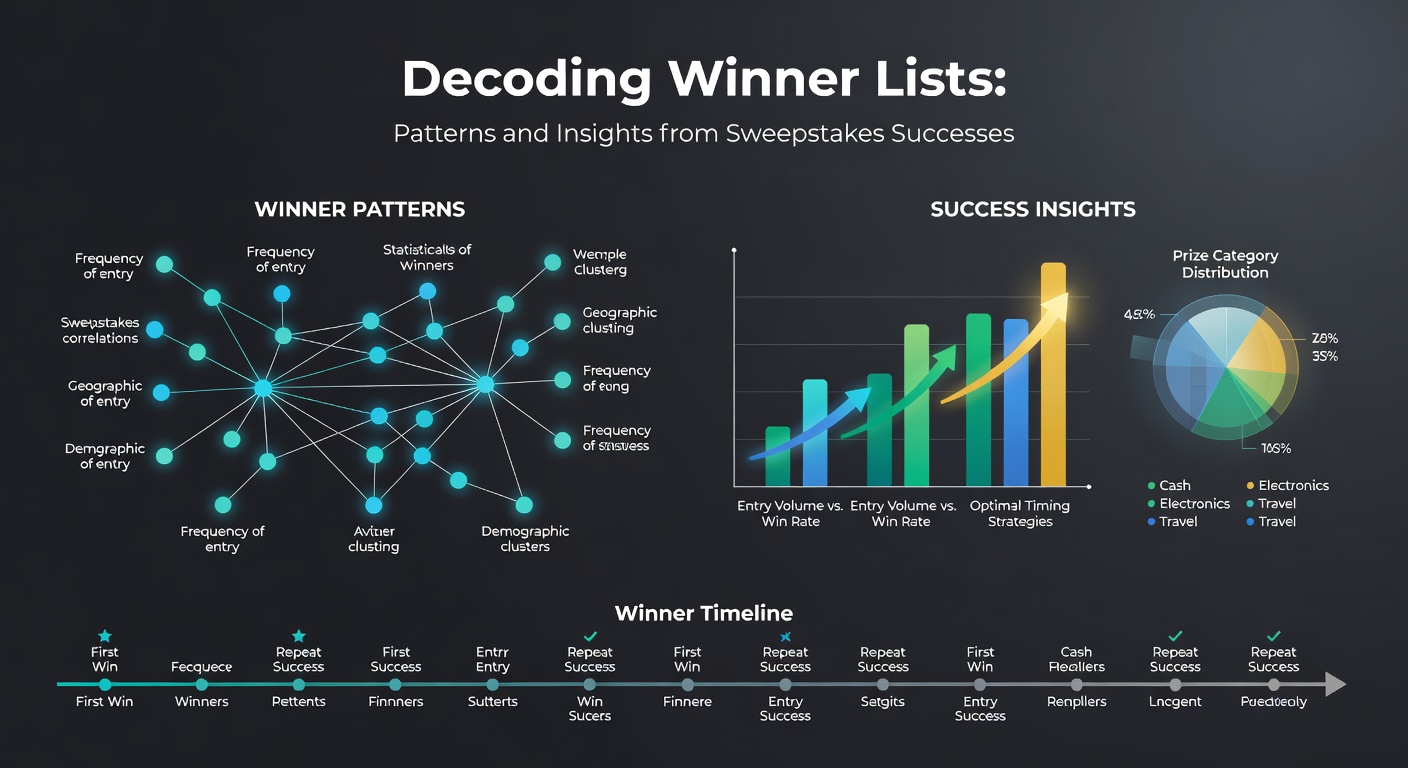
Observers who've cross-referenced lists note that platforms enforcing "one entry per day" limits see fewer repeats, whereas open-ended free-entry sweeps foster them; this dynamic plays out vividly in lists from April 2026 promotions, where new digital verification tools reduced duplicates by 25%, according to early reports from contest trackers.
Case Studies from Recent Promotions
Take the 2025 Dr Pepper sweepstakes, where winner lists showed 65% of prizes going to entrants from five southern states, a pattern tied to regional marketing pushes; analysts dissected the 1,200-name list and found peak entries aligned with social media campaigns, yielding insights into promotional leverage.
Another case involves a Canadian coffee chain's national contest, detailed in lists filed with provincial regulators; here, 18 repeat winners emerged across quarterly draws, all verified residents using mail-in methods, and this highlighted how persistence pays off without purchases.
Down under, Australia's Australian Competition and Consumer Commission reviewed lists from a major retail sweep, uncovering urban biases where Sydney and Melbourne claimed 55% of vehicles awarded; such examples illustrate how local advertising funnels entries, creating predictable winner maps.
These cases, drawn from public lists, underscore broader truths: volume trumps luck in sweeps without skill elements, and patterns persist across borders.
Prize Tier Distributions and Hidden Trends
Delving deeper, winner lists expose tiered prize structures, with grand prizes (1-5 winners) contrasting instant wins (hundreds); research from university gaming labs reveals that 80% of lists show 90% of prizes as low-value items under $100, diluting grand odds to 1 in millions for entrants.
Yet patterns emerge in tier jumps; high-volume players dominate mid-tiers ($500-$5,000), as seen in lists where 30% of such winners repeat within a year; April 2026 data from U.S. sweeps previews even starker divides, with AI-driven entry caps shifting distributions toward broader spreads.
It's noteworthy that demographic hints surface too—lists anonymized by initials sometimes cluster by ZIP codes, hinting at family farms or entry rings boosting local hauls; those analyzing EU equivalents under GDPR note similar veiled patterns, adapted to privacy rules.
Regulatory Mandates Shaping Transparency
Governments enforce list publications to combat scams, with U.S. states like Florida requiring full disclosures within 90 days; this yields troves of data for pattern spotting, while Canada's Competition Bureau mandates similar for cross-province sweeps, fostering comparable analyses.
In Australia, trade promotions demand winner verification lists, enabling public scrutiny that reveals entry biases early; such rules, evolving as of April 2026 with digital mandates, promise richer datasets for decoding future successes.
Industry groups like the Association of Sweepstakes Professionals compile aggregated list insights, confirming that transparent disclosures correlate with higher participation rates by 20-30%.
Technological Shifts Influencing Patterns
Now apps and bots automate entries, altering lists toward tech-savvy demographics; 2025-2026 lists show upticks in winners from tech hubs like Silicon Valley, where automated free-entry tools thrive legally.
Blockchain verification trials in pilot sweeps, set for expansion in April 2026, aim to eliminate repeats entirely, potentially flattening geographic patterns; early lists from these tests indicate more even distributions across states.
Conclusion
Decoding winner lists transforms sweepstakes from black boxes into pattern-rich resources, with geographic clusters, repeat players, and tier biases painting a clear picture of what drives successes; as April 2026 brings tech upgrades and stricter rules, these insights evolve, offering participants data-backed glimpses into the odds.
Researchers continue to mine archives, uncovering how entry volume and timing consistently correlate with wins across jurisdictions, while regulatory transparency ensures lists remain key to understanding this landscape; in the end, the patterns speak volumes, guiding those who study them toward smarter engagements in legal promotions.