How Promotional Timing Shapes Coin Redemption Volumes in Interstate Gaming Applications
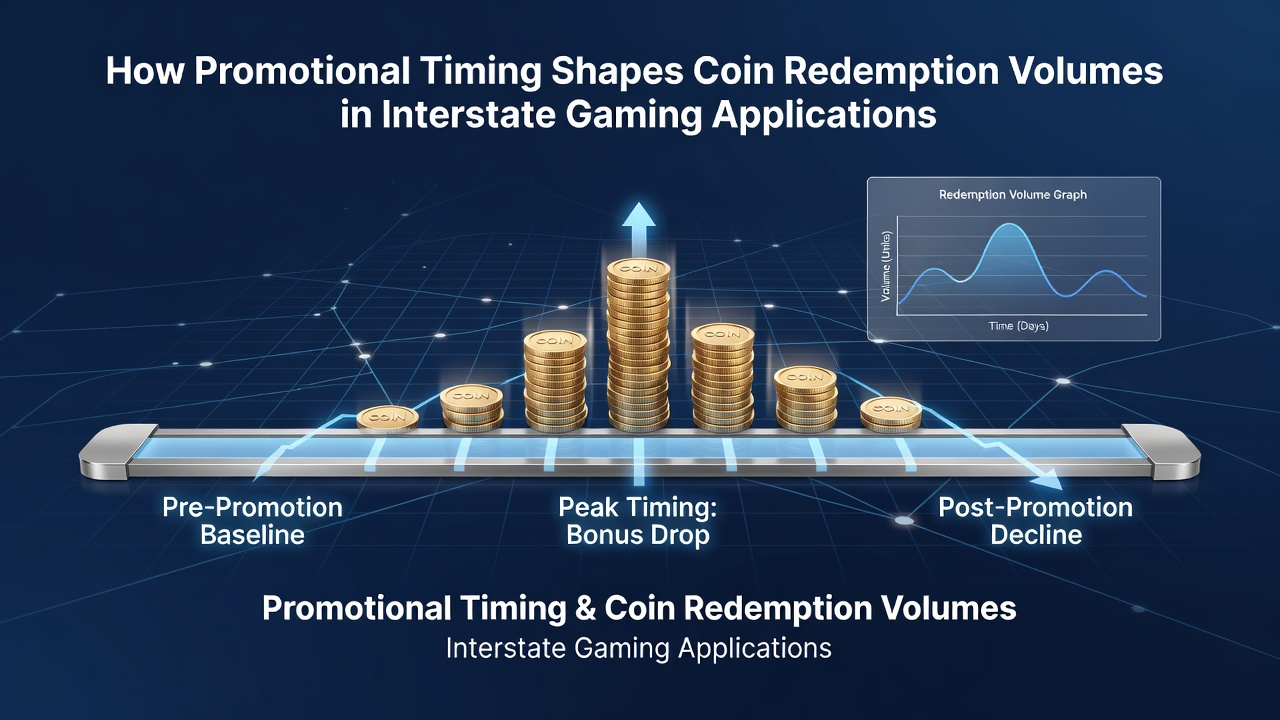
Operators in interstate gaming applications track promotional timing as a primary driver of coin redemption activity, since offers released at certain hours or days produce measurable shifts in participant behavior across state lines. Data collected from regulated platforms shows that redemptions rise sharply when promotions align with evening hours in multiple time zones, while morning releases generate steadier but lower volumes. Researchers examining transaction logs note that these patterns hold steady because users in different jurisdictions respond to the same calendar cues even when local rules differ.
Daily Timing Patterns and Volume Shifts
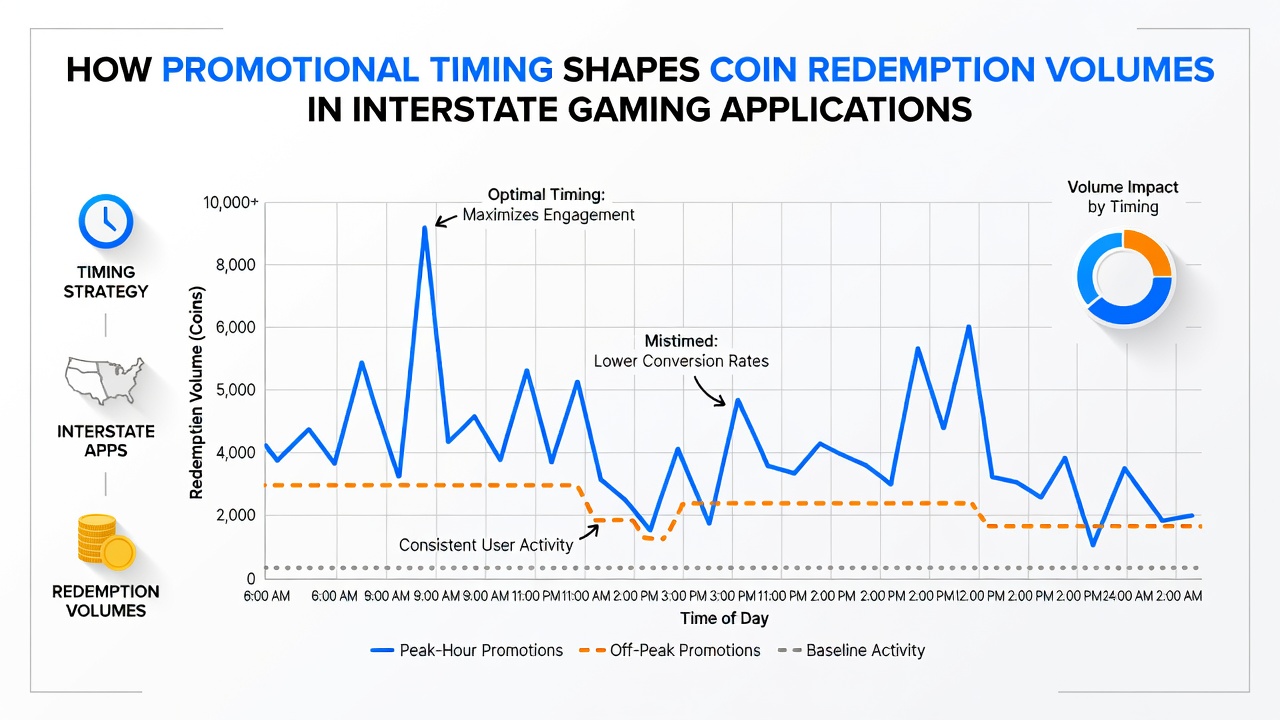
Platforms release coin promotions at staggered intervals throughout the day, and records indicate that releases between 6 p.m. and 10 p.m. local time in the eastern and central zones coincide with the highest redemption counts. Afternoon windows see moderate activity, whereas overnight releases produce the smallest immediate upticks yet sometimes carry over into the next day. Observers note that interstate operators adjust schedules to capture overlapping peak periods, because a single promotion must serve users in states that observe different daylight saving transitions.
Studies of transaction data reveal that users often complete redemptions within two hours of a promotion launch when the offer arrives during established leisure blocks, while the same offer issued at 9 a.m. may take four to six hours to reach comparable totals. This difference appears across multiple operators and persists after accounting for variations in state verification requirements.
Weekly Cycles and Seasonal Influences
Weekly patterns emerge clearly in aggregated reports, with Thursday and Friday promotions generating larger redemption volumes than mid-week drops. Weekend releases maintain elevated activity but show more gradual accumulation because participants spread redemptions across multiple sessions. July 2026 data from several multi-state platforms illustrated that promotions tied to summer holidays produced a 28 percent increase in redemptions compared with the preceding month, a rise attributed to extended leisure time rather than changes in prize structures.
Seasonal events such as back-to-school periods or regional festivals further modulate these cycles, because operators coordinate timing to avoid conflict with state-specific restrictions on promotional frequency. Those who monitor cross-border activity report that alignment with federal holidays yields the most consistent volume lifts, since users in participating states receive the offers under similar calendar conditions.
Interstate Regulatory Factors Affecting Timing
State verification protocols impose additional constraints on when promotions can launch, because some jurisdictions require pre-approval periods that shift effective release times. Operators therefore build buffers into schedules to ensure simultaneous availability across borders. According to records maintained by the New Jersey Division of Gaming Enforcement, timing adjustments for compliance have produced measurable differences in redemption pacing when compared with less regulated neighboring states.
Another layer appears in age and identity checks that vary by state, which can delay redemptions if a promotion lands during periods when verification staff operate at reduced capacity. Platforms that synchronize launches with peak verification availability record faster completion rates, while those that ignore these windows experience backlogs that reduce overall volume within the promotional window.
Observed Data Trends Across Platforms
Figures compiled by the Gaming Laboratories International show that coordinated timing across three or more states produces redemption volumes up to 35 percent higher than single-state campaigns of similar value. The same analysis indicates that misalignment between promotion start times and state-specific payout processing hours leads to measurable drop-off, because users encounter delays that reduce completion rates.
Longitudinal tracking further demonstrates that repeated use of optimal windows reinforces user expectations, so subsequent promotions released at the same hour generate predictable volume curves. Interstate operators therefore maintain internal calendars that map these recurring peaks against regulatory calendars in each jurisdiction they serve.
Conclusion
Promotional timing functions as a controllable variable that directly influences coin redemption volumes in interstate gaming applications through its interaction with daily routines, weekly cycles, and state-specific compliance rules. Records from multiple operators confirm that strategic alignment of release windows with user availability and regulatory processing capacity produces consistent volume increases, while misaligned timing reduces the effectiveness of the same promotional value. Continued monitoring of these patterns allows operators to refine schedules that respect jurisdictional differences and capture measurable participation lifts.