Network Latency Effects on Real-Time Participation in Multi-Jurisdictional Prize Platforms
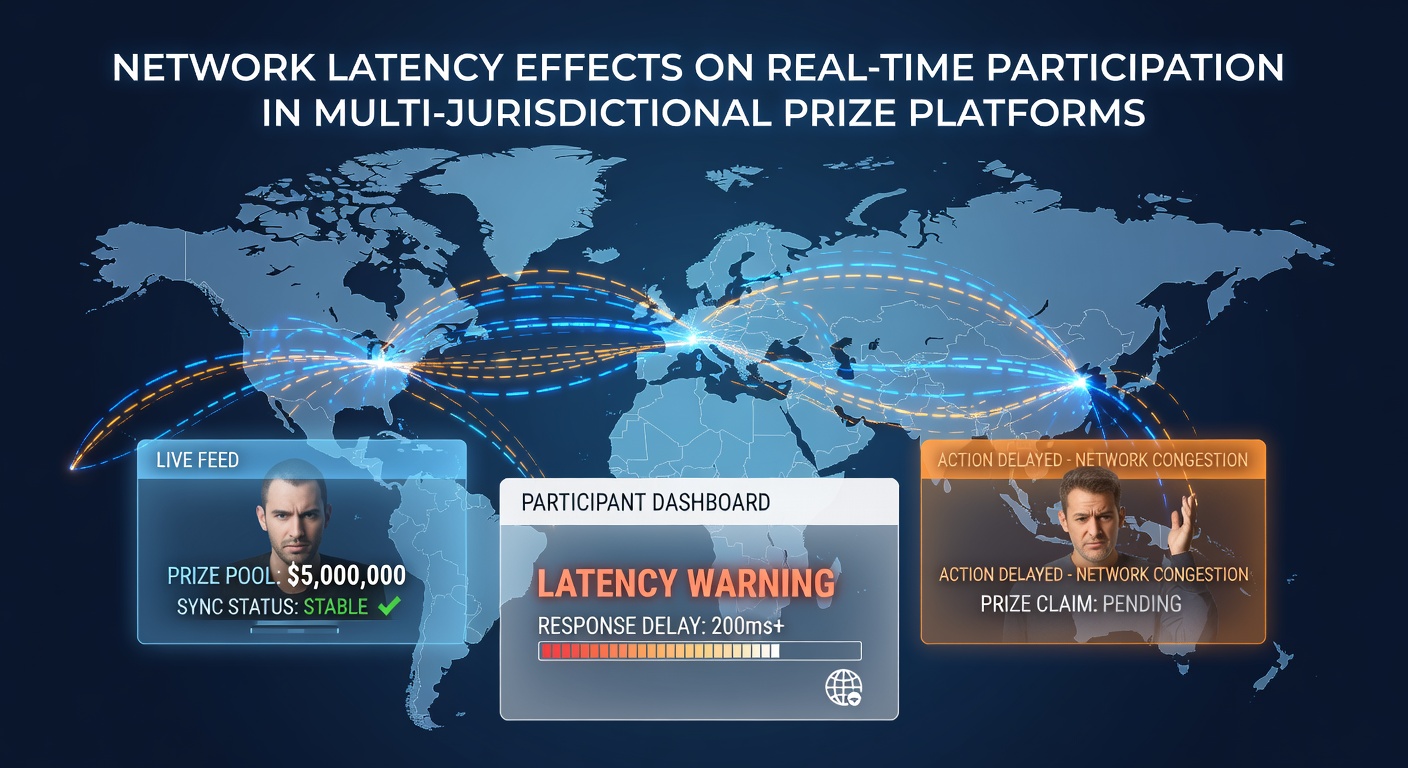 Network latency refers to the delay that occurs when data travels from a participant's device to a central server and back again, and this factor becomes especially critical in multi-jurisdictional prize platforms where entries must register within precise time windows across different regulatory zones. Observers note that even small delays measured in milliseconds can shift whether an entry counts as valid when platforms enforce simultaneous cutoffs tied to specific state or regional rules. Data from broadband monitoring programs shows average latency ranging between 20 and 80 milliseconds on typical consumer connections, yet spikes above 150 milliseconds appear frequently during peak evening hours when many users log in for time-sensitive events.
Core Mechanics of Latency in Live Contest Systems
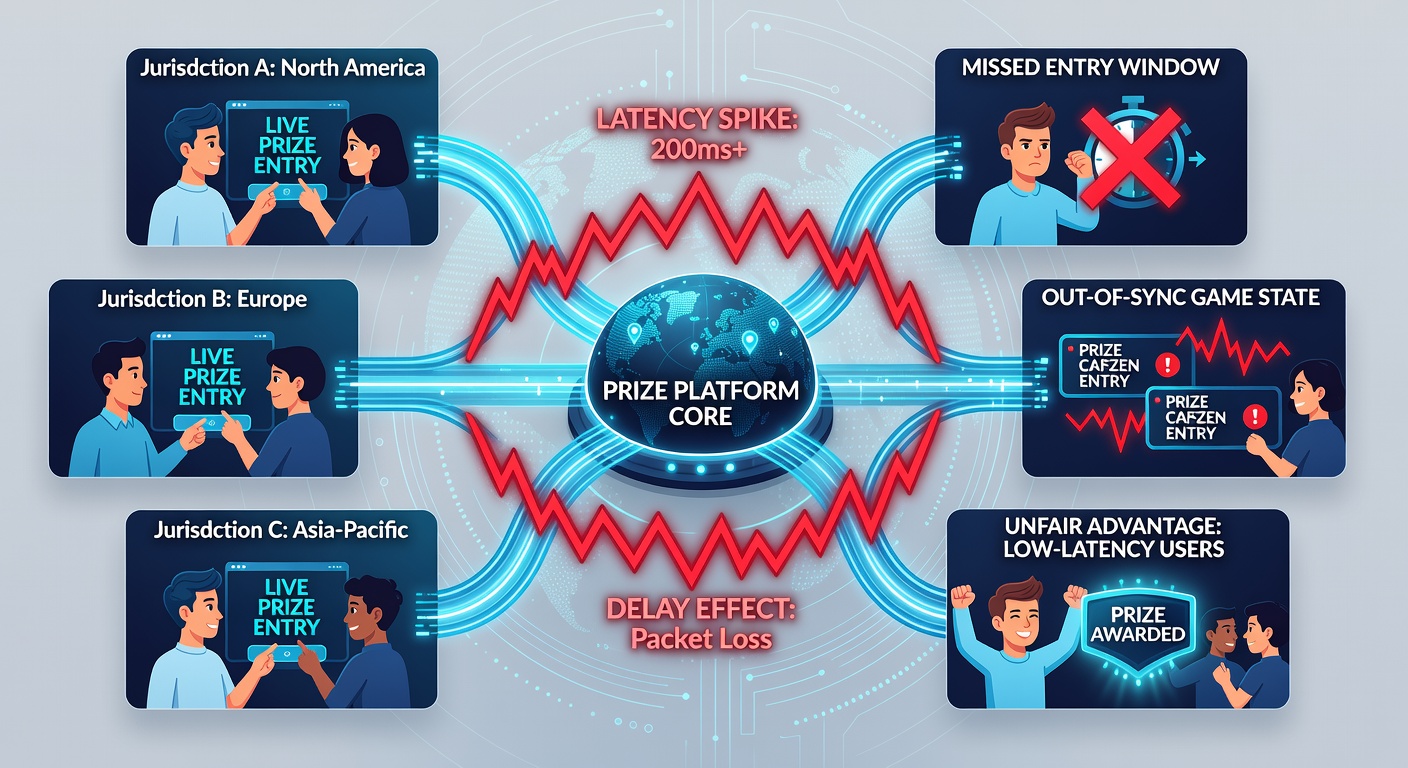
Real-time participation depends on synchronized clocks between user devices and backend servers, while latency disrupts that alignment by creating staggered arrival times for entry packets. Researchers tracking cross-state contest activity have documented cases where participants in high-latency regions submit entries that arrive after the official close because routing paths cross multiple network hops. Those who've studied this pattern point out that fiber connections often keep delays under 30 milliseconds whereas satellite or rural wireless links push the same data transfers into ranges exceeding 100 milliseconds. The difference matters when platforms process thousands of entries per second and apply strict sequencing based on receipt timestamps.
Jurisdictional Timing Variations and Their Interaction with Delays
Platforms operating across multiple states must reconcile different verification protocols that sometimes require entries to clear local compliance checks before global acceptance, and network delays compound these steps by slowing the handoff between regional gateways. Figures from 2025 infrastructure reports indicate that participants near major exchange points experience more consistent performance, whereas those farther from backbone routes encounter variable routing that adds unpredictable jitter. In June 2026 several operators updated their systems to incorporate buffer windows calibrated to average latency measurements drawn from user location data, yet the adjustments still leave gaps when sudden congestion hits during large-scale promotional periods.
Observed Patterns in Entry Success Rates
Analysis of participation logs reveals that regions with median latency above 60 milliseconds record entry failure rates roughly 12 percent higher than low-latency zones during identical contest windows. One study compiled by academic researchers at a North American university tracked over 2 million submissions across six jurisdictions and found that packet loss combined with latency accounted for most of the discrepancies rather than user error. Those reviewing the datasets note that mobile connections introduce additional variability because handoffs between cell towers create brief interruptions that push total round-trip times beyond acceptable thresholds.
Technical Factors Amplifying Latency Issues
Server load, encryption overhead, and content delivery network placement each contribute to cumulative delays that affect how quickly an entry registers in the official ledger. Experts monitoring platform performance during high-volume periods report that encryption handshakes alone can add 15 to 40 milliseconds depending on certificate chain length and regional certificate authority response times. When these layers stack on top of baseline network latency the total delay frequently exceeds the tolerance built into real-time verification scripts. Platforms therefore deploy edge servers closer to high-density user clusters, yet gaps remain in sparsely populated regulatory areas where infrastructure investment lags.
Regulatory Reporting and Infrastructure Benchmarks
According to measurements published by the Federal Communications Commission, rural broadband users face latency distributions that place a significant portion of connections outside the range required for seamless real-time contest entry. Comparable data gathered by the Canadian Radio-television and Telecommunications Commission shows similar geographic disparities that influence cross-border platform operations. Industry groups such as the Broadband Forum have compiled standardized testing methodologies that operators now reference when auditing their own systems for compliance with timing accuracy standards.
Adaptive Approaches Implemented by Platform Operators
Some operators have introduced client-side prediction algorithms that pre-send entry metadata to reduce effective latency, while others adjust cutoff windows dynamically based on real-time network telemetry collected from participant devices. These methods do not eliminate underlying infrastructure differences but they narrow the performance gap between users on disparate connection types. Reports from testing conducted in early 2026 indicate that such adaptations lowered variance in entry acceptance rates by approximately 8 percent across tested jurisdictions without altering core contest rules.
Conclusion
Network latency continues to shape participation outcomes on multi-jurisdictional prize platforms through its direct influence on entry timing accuracy and verification success. Infrastructure differences across regions create uneven conditions that operators address through technical adjustments and data-driven calibration. Ongoing monitoring by regulatory bodies and research institutions supplies the measurements needed to refine these responses as network conditions evolve.