Peer Influence Dynamics Shaping Entry Behaviors in Regulated Digital Prize Contests
Kai Simon · Jul 29, 2026
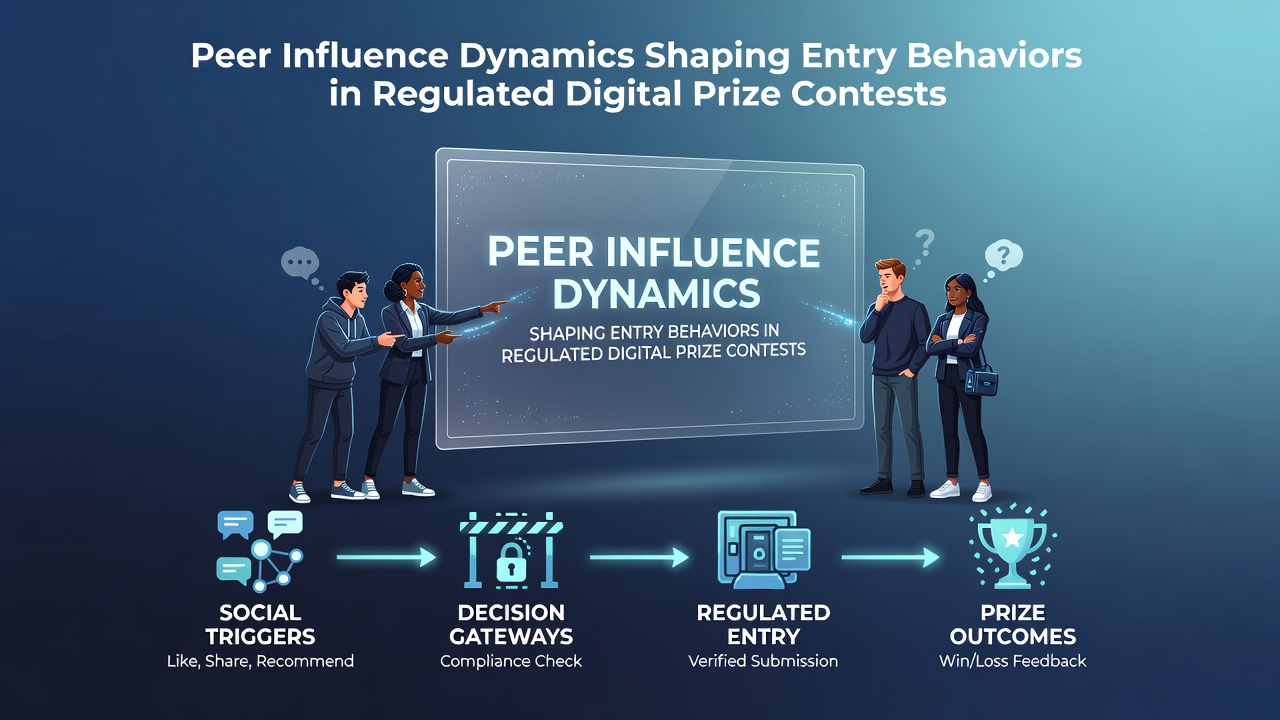
Peer Influence Dynamics Shaping Entry Behaviors in Regulated Digital Prize Contests
Regulated digital prize contests operate under strict state and federal oversight across multiple jurisdictions, and entry behaviors within these platforms often reflect patterns shaped by peer networks rather than isolated individual choices. Participants frequently encounter contest opportunities through social connections, shared referral codes, and group discussions that circulate on messaging apps or community forums. Data collected from multi-state platforms shows that first-time entries cluster around periods when existing users extend invitations to friends or family members, creating measurable spikes in registration activity.
Social Transmission of Contest Information
Observers note that information about available prize pools and entry mechanics travels rapidly through established social circles, particularly in regions where multiple states permit similar contest formats. Researchers tracking participation logs have documented cases where a single active user sharing details about a new sweepstakes event leads to clusters of related accounts registering within hours. This transmission occurs through direct messaging, public posts, and in-app group features that platforms introduced to streamline coordination among known contacts.
Studies conducted on platforms active during 2025 and into July 2026 indicate that peer-shared links account for a substantial portion of new entries compared to direct marketing channels. Regulatory filings from various state gaming commissions further reveal that verification records often list common referral sources among participants residing in adjacent states, suggesting geographic proximity amplifies these effects when rules permit cross-border access.
Observational Learning and Entry Timing
People who observe peers completing entries tend to replicate similar timing and selection patterns, according to behavioral data aggregated from several regulated operators. When one participant posts about successful redemptions or accumulated credits, nearby network members frequently adjust their own entry schedules to align with those reported outcomes. This mirroring appears in timestamp records that show synchronized activity spikes following visible peer updates rather than random distribution throughout the day.
Group Norms and Participation Thresholds
Group norms establish unspoken thresholds for acceptable entry volume and contest type preferences within peer circles. In one documented case involving a multi-state platform, users belonging to the same professional network consistently favored contests with skill-based components once several members publicly endorsed that format. Data from verification systems shows that new entrants from such groups adopted comparable entry frequencies within the first week of registration, whereas solo registrants displayed more variable patterns.
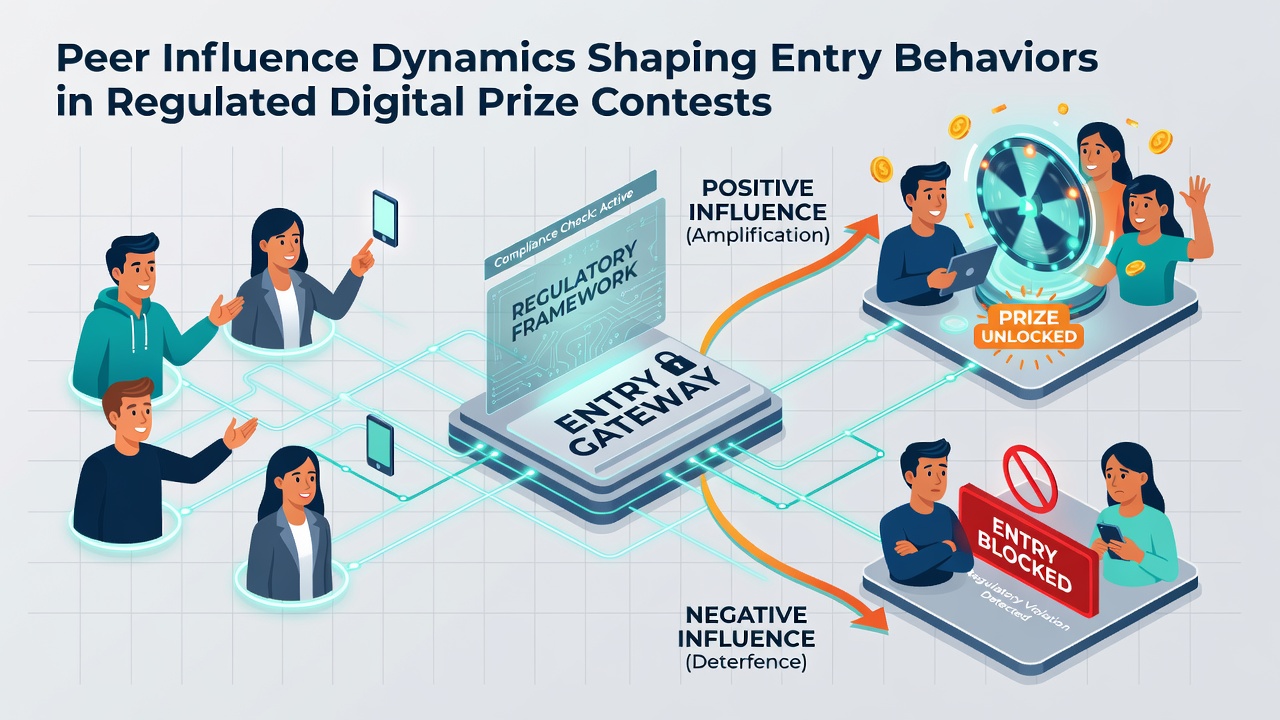
Academic analyses of platform datasets confirm that these group-level consistencies persist even when individual participants receive identical promotional materials. The presence of shared references to prior group experiences appears to override isolated marketing messages in shaping final decisions about which contests to join and how many entries to submit.
Regional and Regulatory Context in Mid-2026
By July 2026, several interstate compacts had updated reporting requirements to capture referral origins alongside standard demographic information. These changes allow analysts to trace how peer influence operates differently across regulatory environments, particularly where one state imposes stricter age verification than neighboring jurisdictions. Figures released through industry trade groups show elevated referral-driven entries in states with recently harmonized rules, suggesting that reduced friction in verification processes facilitates faster spread of contest information through existing social ties.
External research from the Australian Gambling Research Centre highlights parallel patterns in regulated prize environments, where social endorsement metrics correlate strongly with entry volume independent of prize size. Similar observations appear in reports issued by Canadian provincial regulators examining digital contest participation, reinforcing that peer dynamics operate consistently across varied oversight frameworks.
Measurement Approaches and Platform Responses
Platform operators employ network analysis tools to quantify the reach of individual referrers and the velocity at which new entries propagate through connected accounts. These measurements feed into compliance reports submitted to state authorities, documenting that referral chains rarely exceed three degrees of separation before activity normalizes. Such findings help regulators distinguish organic peer influence from coordinated activity that might trigger additional scrutiny under existing anti-spam or anti-fraud provisions.
Those who study these systems note that platforms have adjusted notification settings and visibility controls in response to observed clustering effects, limiting how broadly one user's activity broadcasts to non-connected accounts. This calibration maintains regulatory compliance while preserving the social features that drive legitimate participation growth.
Conclusion
Peer influence dynamics in regulated digital prize contests manifest through measurable referral chains, synchronized entry timing, and adoption of group norms documented across multiple data sources. Regulatory updates through mid-2026 continue to refine tracking methods, providing clearer pictures of how social connections shape entry behaviors within legal boundaries. These patterns remain consistent whether examined through state filings, academic datasets, or cross-border comparative studies, illustrating the structural role of networks in contest participation.